
Why Bilona Ghee is Expensive: Why Does It Cost ₹2000+ While Regular Ghee Costs ₹500?
Have you ever wondered why Bilona Ghee is expensive. One litre of regular ghee costs ₹500 while A2 bilona ghee costs over ₹2000?
Many consumers assume that all ghee is essentially the same product and that premium brands simply charge more because of packaging or marketing. However, the truth is far more fascinating.
At Vedatman, we believe consumers deserve complete transparency about how their food is sourced, prepared, and priced. Understanding the traditional Bilona process can help you make informed choices when purchasing premium desi ghee.
Before comparing prices, it is important to understand what makes authentic A2 Cow Bilona Desi Ghee different from commercially manufactured ghee.
The price difference is largely determined by:
- The breed of cow
- Milk production capacity
- The traditional Bilona manufacturing process
- Labour and time involved
- Quantity of milk required
- Nutritional quality
- Small-batch production
- Quality control and purity standards
When you understand how authentic Bilona Ghee is produced, the pricing begins to make sense.
Why Bilona Ghee is Expensive: What Makes It Different?
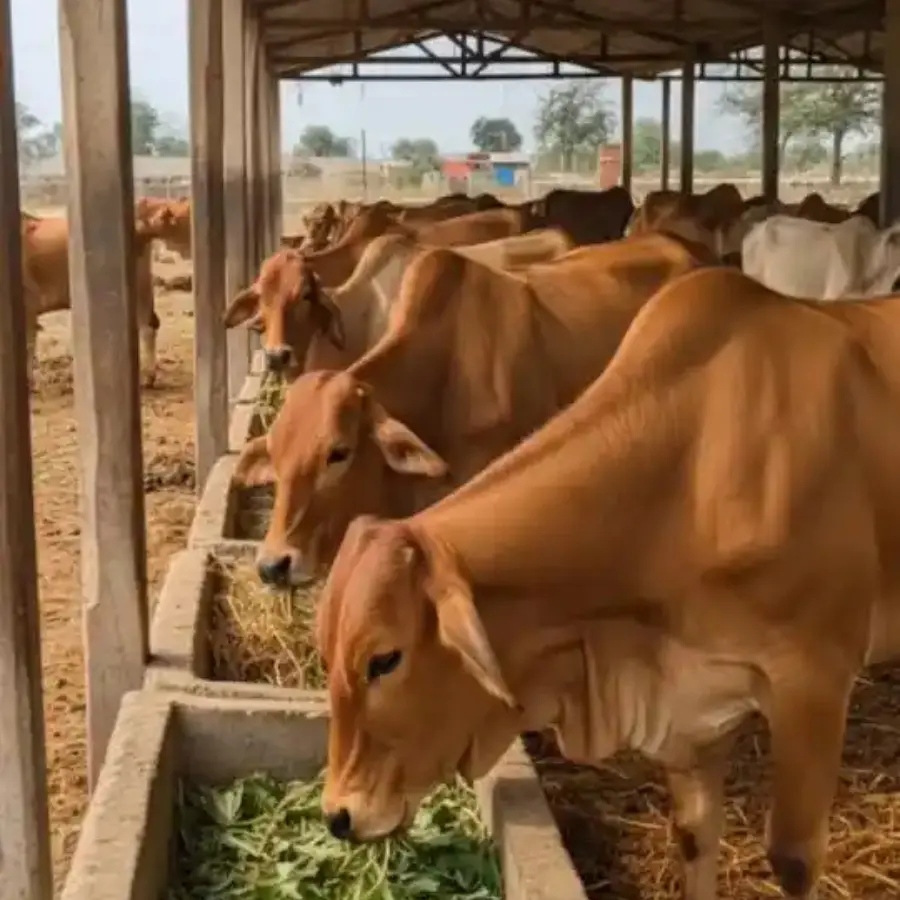
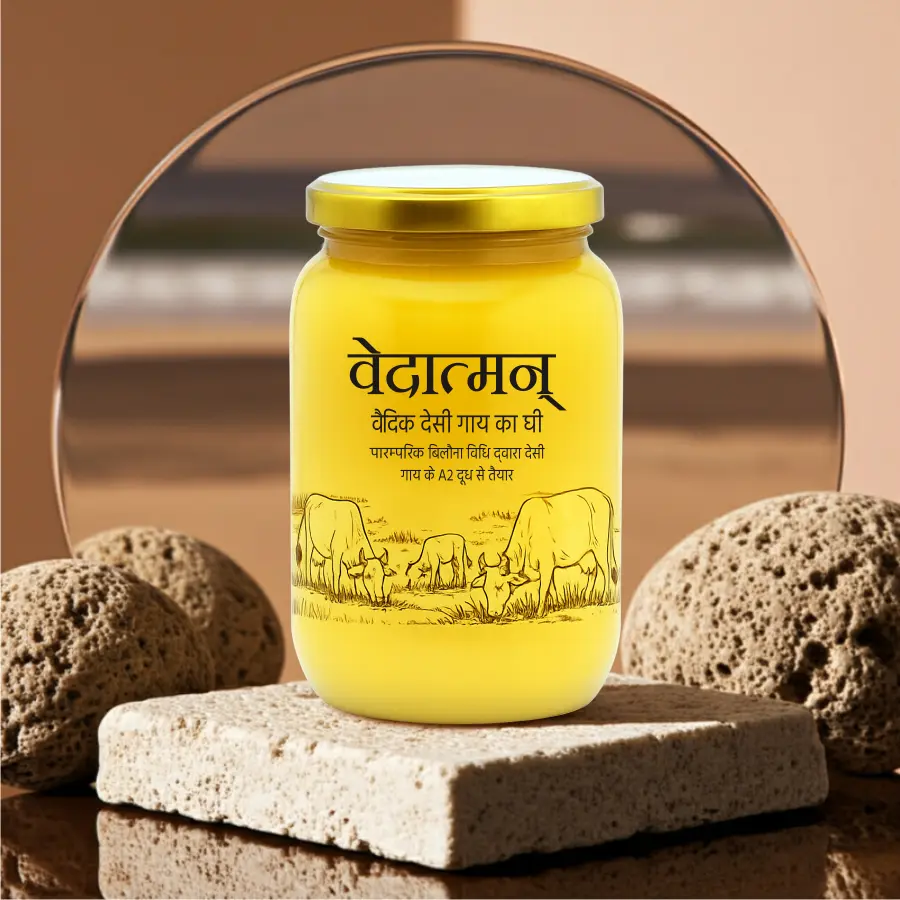

Bilona Ghee is not merely “ghee made from cow’s milk.” Authentic Bilona Ghee is traditionally prepared using the ancient cultured butter method described in Ayurvedic literature. The traditional Bilona Method follows a centuries-old cultured butter process that differs significantly from modern cream-based manufacturing.
The process involves:
- Collecting fresh milk.
- Boiling and cooling the milk.
- Setting curd naturally.
- Churning the curd into butter with traditional wooden bilona.
- Slowly heating cultured butter to obtain ghee.
Unlike commercial ghee production, cream is never directly converted into ghee.
This traditional process preserves several naturally occurring nutrients and imparts the characteristic aroma, texture, and granular structure associated with premium Desi Ghee.
Why Is Regular Ghee So Much Cheaper Than Bilona Ghee?
Commercial ghee manufacturers achieve economies of scale through:
- High-yield cattle breeds
- Cream separation technology
- Automated manufacturing plants
- Bulk milk procurementContinuous production systems
- Lower labour requirements
Commercial manufacturing is designed for:
- Higher production volume
- Faster processing
- Lower manufacturing costs
- Wider market availability
Commercial manufacturing is designed for:There is nothing inherently wrong with commercial ghee when produced according to food safety standards. However, it differs significantly from traditionally prepared Bilona Ghee.
Why Bilona Ghee is Expensive: How Much Milk Is Required?
This is one of the biggest reasons behind its premium price.
Approximate quantities required:
| Product | Quantity Required |
| Milk | 28-30L |
| Curd | Entire Milk Batch |
| Butter | 1-1.5Kg |
| Bilona Ghee | Approximately 1L |
Depending upon:
- Cow breed
- Milk fat percentage
- Seasonal variations
- Animal nutrition
- Farming practices
The quality of milk depends largely on the breed of the cow. Indigenous Indian cow breeds are particularly valued for their rich milk composition and traditional dairy characteristics.
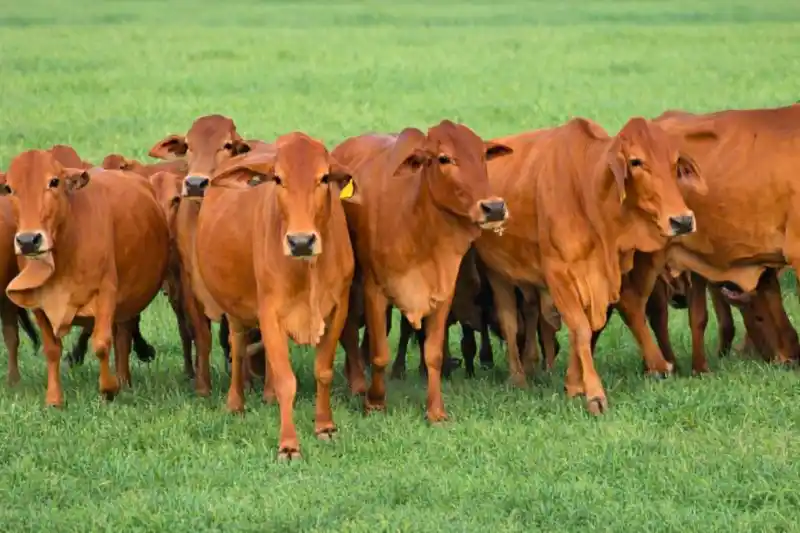
An indigenous cow generally produces significantly less milk than commercial dairy breeds. Premium Bilona Ghee manufacturers prioritize milk quality over production volume.
Why Bilona Ghee is Expensive: Indigenous Cows Produce Less Milk
Authentic A2 Bilona Ghee is commonly prepared using milk obtained from indigenous Indian breeds such as:
- Gir
- Kankrej
- Sahiwal
- Tharparkar
- Red Sindhi
Not all cow milk is nutritionally identical. Understanding the difference between A2 and conventional milk proteins can help consumers make better purchasing decisions.These breeds are highly valued for:
- Rich milk fat
- Natural beta carotene content
- Traditional dairy suitability
- Adaptability to Indian climates
However, their daily milk production is often much lower than commercial dairy breeds.
Lower milk yield directly affects:
- Production cost
- Supply availability
- Manufacturing economics
This contributes significantly to the final retail price.
Why Bilona Ghee is Expensive: The Traditional Bilona Method Is Labour Intensive
Authentic Bilona Ghee cannot be manufactured quickly. The process involves multiple stages:
Stage 1: Why Bilona Ghee is Expensive: Fresh Milk Collection
- Fresh milk procurement
- Quality inspection
Stage 2: Why Bilona Ghee is Expensive: Natural Curd Formation
- Controlled fermentation
- Proper resting time
Stage 3: Why Bilona Ghee is Expensive: Traditional Bilona Churning Process
Traditionally, cultured curd is churned to separate butter with the help of wooden churner called Bilona.
Stage 4: Why Bilona Ghee is Expensive: Cultured Butter Preparation
The cultured butter is carefully collected in small batches.
Stage 5: Why Bilona Ghee is Expensive: Slow Heating Technique
The mitti handi of butter is slowly heated at controlled temperatures on traditional wood fire to produce ghee.
Every stage requires:
- Skilled labour
- TimeHygiene management
- Small batch handling
Commercial production can be completed much faster, whereas traditional Bilona manufacturing prioritizes quality over speed.
Bilona Ghee Is Not Mass Produced
Premium Bilona Ghee manufacturers usually follow:
- Small batch production
- Limited inventory
- Seasonal milk cycles
- Quality-based sourcing
Mass production introduces challenges such as:
- Quality inconsistency
- Storage concerns
- Raw material variability
Traditional producers intentionally avoid large-scale industrial manufacturing.
Why Packaging Also Increases Costs
High-quality Bilona Ghee is often packed using:
- Food-grade glass jars
- Premium lidsTamper-proof seals
- Food-safe packaging materials
Glass packaging is significantly more expensive than plastic alternatives but offers several advantages:
- Better preservation
- Reduced chemical interaction
- Premium consumer experience
Is Expensive Ghee Always Better?
No. A higher price tag does not automatically guarantee purity.
Consumers should evaluate:
- Manufacturing method
- Milk sourceTransparency of the brand
- Ingredient declaration
- Quality standards
- Customer reviews
- Packaging practices
Before purchasing premium ghee, ask:
- Which cow breed is used?
- Is it prepared using the Bilona method?
- Is cultured butter used?
- Is the manufacturing process transparent?
- Is the product lab tested?
Price alone should never be the deciding factor.
Reputable manufacturers openly share details about their sourcing practices, manufacturing methods, and quality standards. You can learn more about Vedatman’s commitment to traditional dairy practices and product transparency on our homepage.
Why Bilona Ghee Develops Natural Granules
Many consumers associate granular texture with purity.
Granules may form due to:
- Traditional preparation methods
- Slow heating techniques
- Natural crystallization
- Storage temperature variations
Pure Bilona Ghee may appear:
- Granular
- Semi-solid
- Liquid
- Soft in warmer climates
Texture can naturally change depending upon environmental conditions.
Why Bilona Ghee is Expensive: Nutritional and Traditional Differences
Many nutrition experts and traditional dietary practices point out the benefits of consuming A2 cow ghee and recommend moderate daily consumption of A2 ghee as part of a balanced diet.
Bilona Ghee is appreciated for:
- Naturally occurring fat-soluble vitamins
- High nutritional content
- Traditional cultured preparation
- Rich aroma and taste
- Presence of beneficial fatty acids
Nutritional composition can vary based on:
- Animal diet
- Farming practices
- Milk quality
- Manufacturing process
Consumers increasingly prefer traditionally prepared ghee because of its heritage value and artisanal production methods.
Why Bilona Ghee is Expensive: Understanding the ₹2000+ Price Tag
The pricing is influenced by several factors:
| Cost Component | Impact on Price |
| Indigenous cow milk | High |
| Low milk yield | High |
| Natural curd formation | High |
| Labour costs | High |
| Small batch production | High |
| Traditional processing | High |
| Premium packaging | Medium |
| Quality control | Medium |
| Supply limitations | High |
The final retail price reflects the cumulative cost of producing authentic traditional ghee rather than simple milk-to-ghee conversion.
Is Bilona Ghee Worth Buying Despite Its Premium Price?
Bilona Ghee may be worth considering if you value:
- Traditional food preparation methods
- Indigenous dairy practices
- Small batch production
- Transparency in sourcing
- Premium food products
Ultimately, the right choice depends upon:
- Your dietary preferences
- Budget
- Intended usage
- Trust in the manufacturer
The goal is not to buy the most expensive ghee but to buy genuine, transparently produced ghee.
Frequently Asked Questions About Why Bilona Ghee is Expensive
Why is Bilona Ghee so expensive?
Because it requires significantly more milk, time, labour, and traditional processing compared to commercially manufactured ghee.
Is Bilona Ghee healthier than regular ghee?
The nutritional profile varies depending on milk quality, manufacturing practices, and sourcing. Many consumers prefer Bilona Ghee for its traditional cultured preparation.
Can Bilona Ghee cost more than ₹2000?
Yes. Pricing varies based on cow breed, milk sourcing, manufacturing methods, and packaging standards.
Why does Bilona Ghee have granules?
Granules are often a result of natural crystallization and traditional preparation techniques.
How can I identify genuine Bilona Ghee?
Look for:
- Transparent sourcing practices
- Traditional manufacturing methods
- Detailed product information
- Authentic customer reviews
- Proper food safety compliance
- Team behind brand
Conclusion
The reason Bilona Ghee costs ₹2000 or more is not merely branding or premium packaging. It is the outcome of traditional dairy practices that involve indigenous cow milk, natural curd fermentation, labour-intensive processing, and small-batch craftsmanship.
Understanding how your food is produced helps you make informed choices. Whether you choose regular ghee or Bilona Ghee, transparency, authenticity, and quality should always guide your decision.
If you’re exploring authentic A2 Cow Bilona Desi Ghee and want to understand our sourcing practices, traditional preparation methods, and product philosophy, visit the Vedatman homepage to discover everything we stand for.
External References
- Food Safety and Standards Authority of India (FSSAI): https://www.fssai.gov.in
- National Dairy Development Board (NDDB): https://www.nddb.coop
- National Institute of Nutrition (India): https://www.nin.res.in
- Food and Agriculture Organization (FAO): https://www.fao.org