
A2 Cow Ghee Benefits – Why Traditional Bilona Ghee is Valued in Indian Diet

Introduction
For centuries, ghee has been an integral part of the Indian diet. From traditional cooking to Ayurvedic practices, it has held a special place in households. In recent years, A2 cow ghee benefits has gained attention because of the growing awareness about indigenous cow breeds and traditional food preparation methods. The numerous A2 cow ghee benefits make it a sought-after ingredient in both culinary and health circles.
A2 cow ghee is prepared from milk that contains A2 beta-casein protein, which is naturally present in many indigenous Indian cow breeds such as Sahiwal, Gir, and Kankrej. When this milk is processed through the traditional bilona method, it produces what is commonly known as A2 cow bilona ghee.
Many people are discovering the A2 cow ghee benefits for digestion and overall health, leading to its increasing popularity in various diets. The A2 cow ghee benefits extend beyond cooking; it is also used in traditional remedies and practices. Understanding the A2 cow ghee benefits helps consumers make informed choices about their dietary options. Due to its unique composition, the A2 cow ghee benefits are recognized in many health circles.
This article explains the traditional understanding, nutritional aspects, and reasons why A2 cow ghee continues to be valued in many Indian households.
What is A2 Cow Ghee?
A2 cow ghee is clarified butter prepared from milk that contains the A2 type of beta-casein protein. This type of milk is generally obtained from indigenous cow breeds of India and has traditionally been used in many Indian households for preparing desi ghee.
Traditional ghee preparation involves several steps:
- Fresh milk collection
- Conversion of milk into curd
- Churning of curd to obtain butter
- Slow heating of butter to obtain ghee
This process follows a traditional dairy practice that has been used in villages and households for centuries. The slow preparation allows butter to gradually transform into aromatic ghee with a distinctive texture and flavour.
This method is commonly known as the bilona method, which has been followed in Indian households for generations. It reflects the traditional approach to preparing pure desi ghee using simple processes rather than industrial techniques.
Traditional Importance of Ghee in Indian Diet
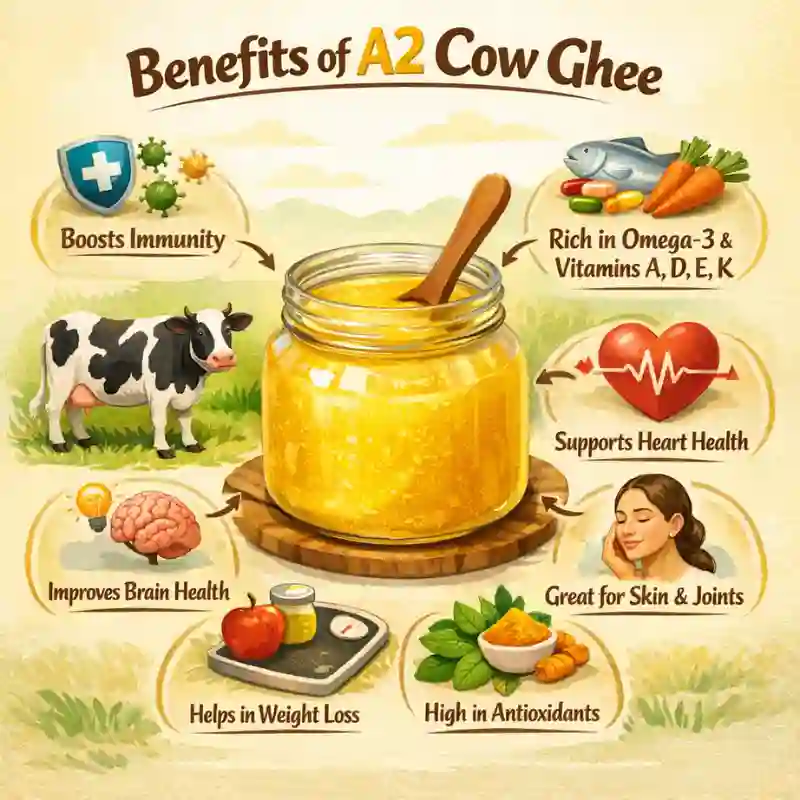
Many studies are investigating the A2 cow ghee benefits, revealing its potential advantages in nutrition. The use of A2 cow ghee benefits in various culinary practices enhances flavors and provides nutritional value. Ghee has been mentioned in classical Ayurvedic literature and traditional food practices. It is widely used in:
- Daily cooking
- Temple offerings
- Ayurvedic formulations
- Traditional sweets and festive dishes
Historically, ghee was considered a stable cooking fat because it has a relatively high smoke point and long shelf life.
Nutritional Composition of A2 Cow Ghee
Each dish prepared with A2 cow ghee brings out the health benefits associated with its consumption. Like other forms of ghee, A2 cow ghee mainly contains:
- Healthy fats
- Fat-soluble vitamins (A, D, E, and K)
- Short-chain and medium-chain fatty acids
- Natural antioxidants
These nutrients contribute to its role as an energy-dense food.
Commonly Discussed A2 Cow Ghee Benefits
1. Source of Healthy Fats
Ghee contains fatty acids that are used by the body for energy. Traditionally, moderate amounts of ghee have been used in Indian meals as a cooking medium.
2. Traditionally Considered Easier to Digest
In traditional food systems, ghee is often considered lighter on digestion compared to many other cooking fats. This may be due to the presence of short-chain fatty acids.
3. Rich in Fat-Soluble Vitamins
With growing awareness, the A2 cow ghee benefits are becoming a topic of discussion in health blogs and forums. A2 cow ghee contains vitamins that dissolve in fat, such as:
- Vitamin A
- Vitamin D
- Vitamin E
- Vitamin K
These vitamins play important roles in normal body functions.
4. Traditionally Used in Ayurveda
In Ayurveda, ghee has been used in several formulations and dietary practices. It is often used as a carrier for herbs and medicines.
5. High Smoke Point
Ghee has a higher smoke point compared to many cooking oils. This makes it suitable for cooking methods such as:
- sautéing
- roasting
- traditional Indian frying
Why the Bilona Method is Important To Get Most of A2 Cow Ghee Benefits
The bilona method is considered the traditional way of preparing ghee. The process involves:
Milk → Curd → Churning → Butter → Slow heating → Ghee
This method differs from the cream-based industrial method, which skips the curd stage. This method is considered the most suitable to get most of the A2 cow ghee benefits. Many traditional food enthusiasts prefer bilona ghee because the process follows traditional fermentation and churning practices.
A1 vs A2 Ghee – Understanding the Difference
The difference between A1 and A2 ghee is based on the type of protein present in the milk used to make it.
- A1 milk contains A1 beta-casein protein
- A2 milk contains A2 beta-casein protein
Indigenous cow breeds in India generally produce A2 milk, whereas many cross-bred cows may produce A1 or mixed milk. When ghee is prepared from A2 milk, it is commonly referred to as A2 ghee.
How to Choose Pure A2 Cow Desi Ghee
Consumers looking for authentic ghee often consider the following factors:
- Milk sourced from indigenous cows
- Traditional bilona preparation
- Transparent sourcing practices
- Lab testing for quality parameters
- Natural aroma and granular texture
These indicators help consumers make informed choices.
Role of Ghee in Traditional Indian Cooking
Ghee is used in a wide range of Indian dishes such as:
- Dal tadka
- Rotis and parathas
- Sweets like laddoos and halwa
- Rice dishes like khichdi
Consumers are increasingly interested in learning about the A2 cow ghee benefits for their health and wellness. Its aroma and flavor enhance the taste of food.
Moderation in Consumption
While ghee has traditional value and nutritional benefits, it is also a high-calorie fat. Like all fats, it should be consumed in moderation as part of a balanced diet.
Conclusion
A2 cow ghee represents a combination of traditional dairy practices, indigenous cow breeds, and time-tested food preparation methods. The bilona method preserves the authenticity of the process that has been followed in Indian households for generations.
When sourced carefully and consumed in moderation, A2 cow ghee can remain a valuable part of a balanced diet and traditional cooking practices.
You can explore traditionally prepared Vedatman A2 Cow Desi Ghee made from indegenous cow A2 milk.
Related Articles:
- Pure A2 Cow Bilona Desi Ghee Benefits for Skin: Insights from Ayurveda and Modern Research
- Health benefits of ghee: Review of Ayurveda and modern science perspectives
- Benefits of Cold Press Mustard Oil